Recently, I listened to an interview with a captain who participated in a “non-motorized yacht race.” Having been a windsurfing enthusiast myself, I found his story fascinating and want to share some of the key points that left a deep impression on me.
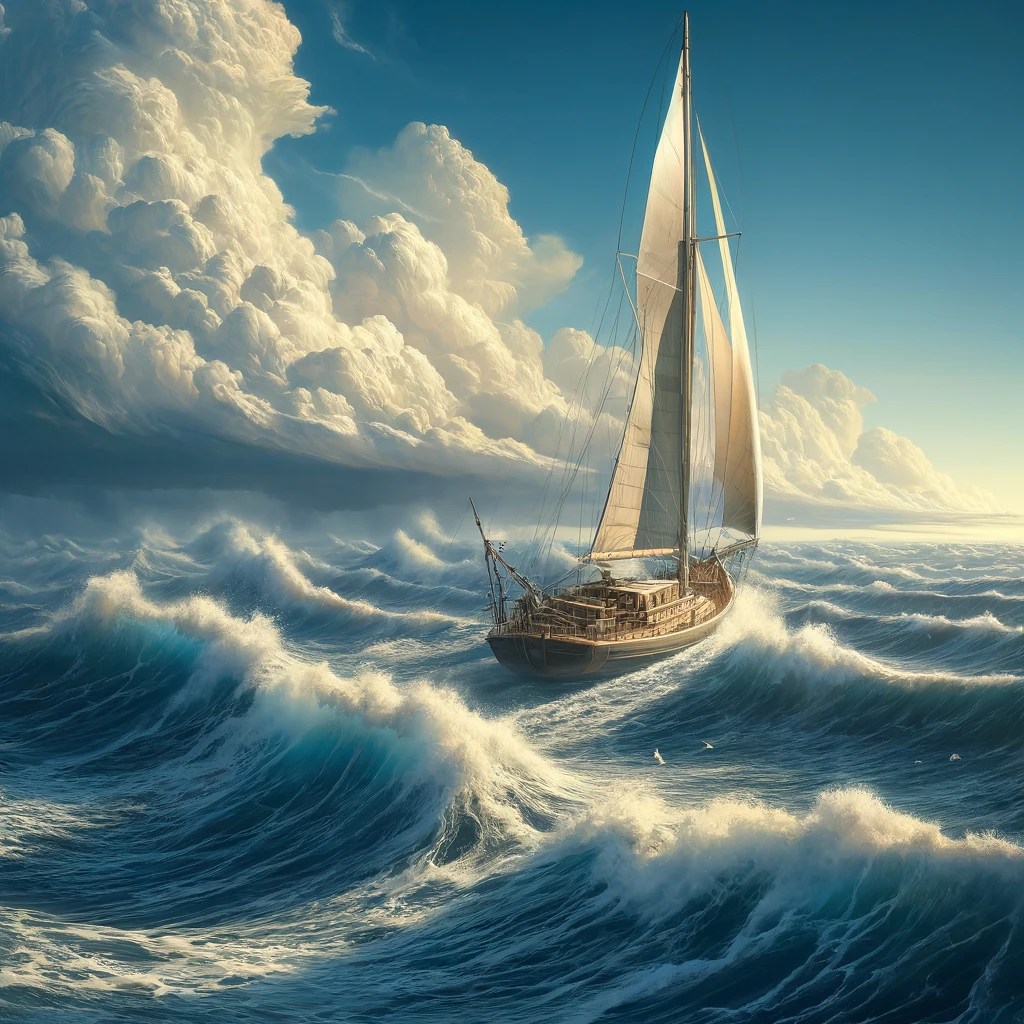
1. People often ask him if he’s afraid of typhoons. Surprisingly, he said that calm winds are more frightening than typhoons. While typhoons can become an ally if you know how to navigate through them, calm winds can leave you stranded for a month.
2. He constantly communicated with the weather bureau to avoid areas of calm winds.
3. He emphasized that lowering the sail and staying still during a typhoon is more dangerous. Although it might seem safe, the large waves could break the mast and sink the boat. The yacht, with its low center of gravity, can right itself even if it tilts up to 90 degrees. Therefore, it’s crucial to keep sailing through the storm.
4. The most frequent task during sailing is repairing the constantly malfunctioning yacht.
5. When asked about the hardest part of sailing, he said that as an adventurer, sailing is always enjoyable regardless of the circumstances. The most challenging and exhausting part is the preparation for the voyage—securing funds, acquiring the yacht, preparing supplies, and finding adequate support.
As I listened to Captain’s story, I couldn’t help but see parallels to a life of faith in this turbulent world.
Traveling on a “non-motorized yacht” in a world full of wind and waves symbolizes a commitment to not live driven by selfish desires. The wisdom in a life of faith lies in “how to harness the blowing wind to get where you want to go,” rather than surrendering to fate and going “where the wind blows.”
People often seek a calm and stable life, but from the perspective that “life is a journey and a process,” nothing is more wasteful than such time. Of course, even that time can be part of the overall journey.
Hearing about his constant communication with the weather bureau reminded me of the importance of prayer. Such “awareness” will truly propel us forward in our daily lives.
To me, the “sail” represents the “banner of the Word.” There is progress in the gospel when we do not lower this banner, no matter the stormy conditions.
The low center of gravity signifies the importance of “humility” in our lives. The one who truly humbles themselves is the strongest person who can always rise again even after falling.
Just as constant malfunctions and repairs are necessary, human sinfulness is like a boat that breaks down at any time. On the voyage of life, if we neglect the sinfulness that emerges at any opportunity, we risk sinking. Therefore, in Christ, we must stay vigilant, repair, and adjust, step by step. “If you do what is right, will you not be accepted? But if you do not do what is right, sin is crouching at your door; it desires to have you, but you must rule over it.” (Genesis 4:7)
Finally, when all preparations are complete, life’s adventure itself is joyous. It depends on the attitude with which we live.
What’s most joyful? For us, the journey of life is already complete in Christ, and we are enjoying the process. The funds, yacht, and supplies are already prepared, and we have the greatest supporter—the Holy Spirit, the Helper—who is always with us at the beginning, during the journey, and at the end. Isn’t that the most joyful thing?
 HEAVENPINE